
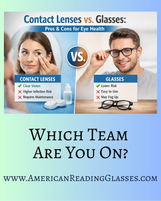
Contact Lenses vs. Glasses: Pros, Cons, and Which Is Better for Your Eyes?
When it comes to correcting vision, most people choose between contact lenses or eyeglasses. Both options can provide clear vision, but they come with very different benefits, costs, and long-term considerations for eye health.
If you’re wondering “Are contacts better than glasses?” or “Should I switch back to glasses?” this guide breaks down the pros and cons of contact lenses vs. glasses—so you can make the best decision for your lifestyle and your eyes.
Are Contact Lenses or Glasses Better for Your Eyes?
Glasses are generally better for long-term eye health because they do not touch the eye, reduce the risk of infection, and help prevent dryness and irritation. Contact lenses can be convenient but require strict hygiene and may worsen dry eye, especially in adults over 40.
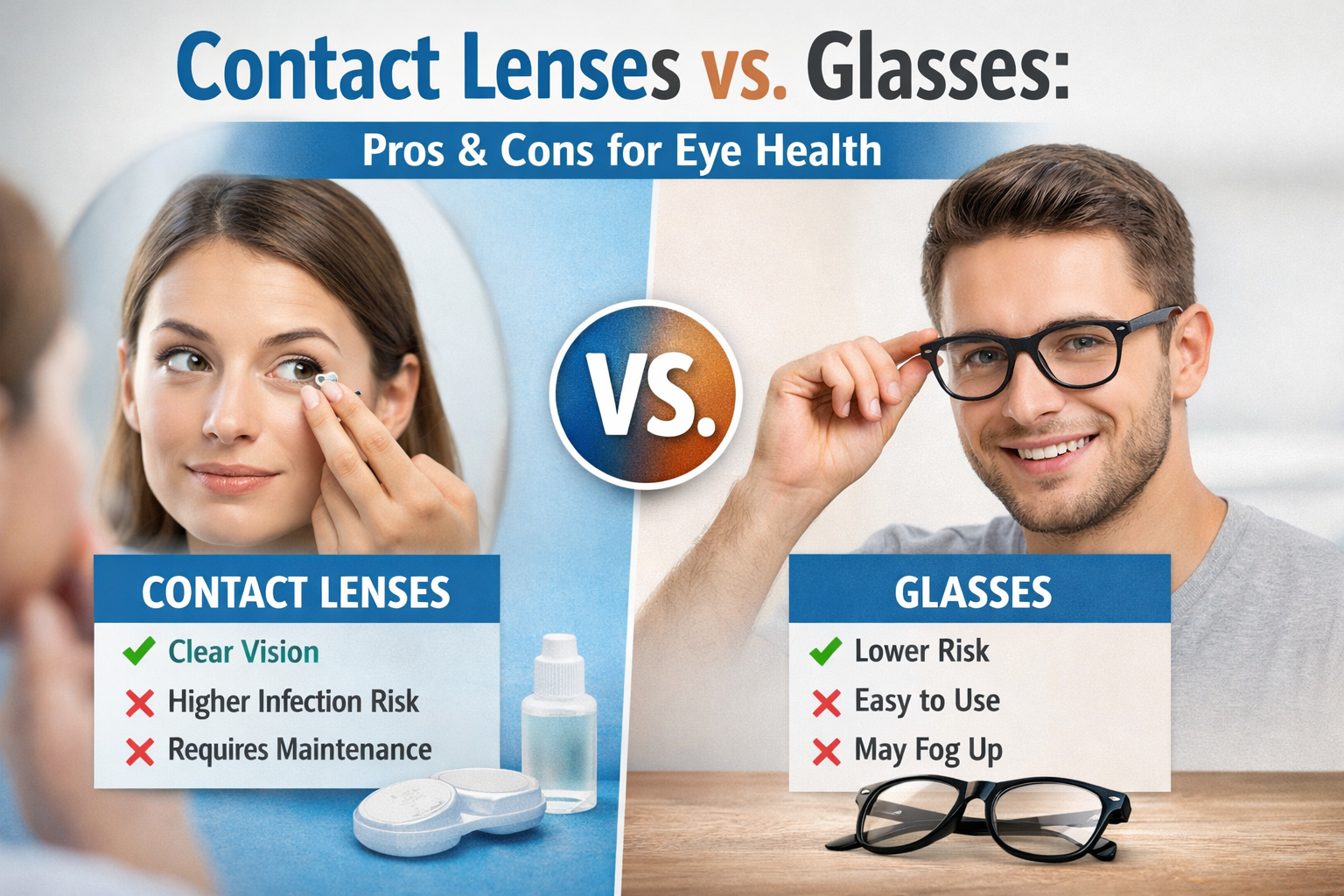
The Pros and Cons of Contact Lenses
Pros of Contact Lenses
1. Natural field of vision
Contacts sit directly on the eye, giving a full, unobstructed field of vision—especially helpful for sports or driving.
2. No fogging or slipping
Unlike glasses, contacts don’t fog up with masks or slide down your nose.
3. Cosmetic flexibility
Some people prefer the look of their face without frames, or enjoy colored or cosmetic lenses.
Cons of Contact Lenses
1. Higher risk of eye infections
According to the CDC, improper contact lens use significantly increases the risk of eye infections, including corneal ulcers.
2. Dry eye and discomfort
Contacts can worsen dry eye syndrome, especially with long screen time or aging eyes (common after 40).
Looking for a More Comfortable Vision Solution?
If contacts leave your eyes feeling dry or irritated, switching to glasses may be the healthier choice. We offer affordable reading glasses, progressive lenses, and high-magnification readers designed for comfort and clarity.
3. Ongoing cost
Between lenses, cleaning solutions, replacements, and eye exams, contacts often cost more long-term than glasses.
4. Daily maintenance
Contacts require strict hygiene. Skipping steps—or sleeping in lenses not designed for it—can lead to serious complications.
The Pros and Cons of Glasses
Pros of Glasses
1. Better for long-term eye health
The American Academy of Ophthalmology notes that glasses carry a lower risk of infection compared to contact lenses.
Optometrist Insight
“For overall eye health, glasses are generally the healthiest option because they allow the cornea to receive full oxygen. The cornea has no blood supply and depends on oxygen from the air, which glasses do not interfere with.
Contact lenses are safe when worn properly, but because they sit directly on the eye, they can reduce oxygen flow and increase the risk of dryness, irritation, or infection if worn for too long or not properly cared for. Anyone who wears contact lenses should always have a pair of glasses, as it's important to give the eyes a break after a day of contact lens wear to allow the cornea to rest and stay healthy.”
— Stephanie Mulick, Optometrist, Tayani Institute
2. Cost-effective over time
A quality pair of reading glasses or prescription glasses can last years with minimal upkeep.
3. Ideal for dry or sensitive eyes
Glasses don’t touch the eye, making them a better option for people with allergies, dry eye, or eye strain.
4. Easy to use and maintain
No cleaning solutions, no replacement schedules—just put them on and see clearly.
5. Style and protection
Modern glasses offer blue-light filtering, UV protection, and fashionable designs that enhance personal style.
Cons of Glasses
1. Can fog or get dirty
Smudges, rain, and fogging are common complaints.
2. Peripheral vision limits
Frames can slightly restrict side vision compared to contacts.
3. Can feel inconvenient during sports
Some activities are easier without frames—though sports glasses can solve this.
Contact Lenses vs. Glasses: Which Is Better?
The answer depends on your age, eye health, and daily habits.
-
For adults over 40 or 50: Glasses—especially reading glasses or progressive lenses—are often more comfortable and safer.
-
For people with dry eyes or frequent screen use: Glasses reduce irritation and eye fatigue.
-
For occasional wearers: Many people choose contacts for special occasions and glasses for everyday use.
In fact, many eye doctors recommend owning both, but relying on glasses for daily wear to give your eyes a break.
Why More People Are Choosing Glasses Again
With increased screen time, remote work, and awareness of eye health, more consumers are searching online for:
Glasses are no longer just functional—they’re comfortable, protective, affordable, and stylish.
Final Thoughts: Your Eyes, Your Choice
Both contact lenses and glasses can correct vision effectively, but glasses offer a safer, lower-maintenance, and more eye-friendly option for many people, especially as we age.
According to guidance from the American Academy of Ophthalmology and the National Eye Institute, proper vision correction and eye comfort play a key role in long-term eye health.
If you’re experiencing eye strain, dryness, or discomfort with contacts, it may be time to reconsider glasses—not as a backup, but as your primary vision solution.
Your eyes work hard for you every day. Choosing the right vision correction helps protect them for years to come.