

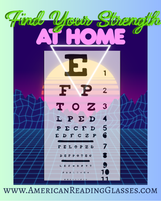
Free Printable Reading Chart: How to Find Your Reading Glasses Strength at Home
If you’ve ever found yourself holding menus farther away, increasing font sizes, or struggling with small print, you’re not alone. One of the most common questions people ask is: “What strength reading glasses do I need?”
The good news is...you don’t have to guess.
A free printable reading chart can help you quickly estimate your ideal reading glasses strength from the comfort of your home.
And if the process feels confusing or you’re between strengths, there’s an even easier option we’ll cover below.
What Is a Free Printable Reading Chart?
A free printable reading chart is a simple tool designed to help you determine your approximate reading glasses strength.
It works by showing lines of text in different sizes, each corresponding to a specific magnification level. By identifying the smallest line you can read clearly at a normal distance, you can estimate the strength that works best for you.
You can download our free reading chart here:
* https://www.americanreadingglasses.com/reading-glasses/reading-chart/
How to Use a Reading Chart at Home
Using a reading chart for reading glasses is quick and easy, but a few details make all the difference:
-
Print at 100% scale
Avoid “fit to page” or resizing. -
Hold at normal reading distance
About 14–16 inches from your eyes. -
Use good lighting
Natural or bright indoor lighting works best. -
Read from large to small text
Move down until it becomes difficult. -
Choose the clearest line
Not the smallest you can read—but the one that feels comfortable.
A properly used printable reading chart gives you a reliable starting point when choosing reading glasses.
What Strength Reading Glasses Do I Need?
Your results from a reading glasses strength chart can guide you toward the right magnification:
-
+1.00 to +1.50 → Light reading (phones, menus)
-
+2.00 to +2.50 → Everyday reading
-
+3.00 to +3.50 → Smaller print
-
+4.00 and above → Fine detail and close-up work
If your results fall into higher ranges, you may want to explore high magnification reading glasses, especially for detailed tasks like crafting, labels, or precision work.
Browse high magnification options:
https://www.americanreadingglasses.com/reading-glasses/high-magnification/
When a Reading Chart Isn’t Enough (And What to Do Instead)
While a free reading chart works well for many people, it’s not perfect for everyone.
You may feel unsure if:
-
You’re between two strengths
-
One eye seems stronger than the other
-
Everything looks “almost clear” but not quite right
-
You’re new to reading glasses and don’t know what to expect
If that happens, don’t guess.
The easiest solution is to order a Try-On Experience, where you can test multiple strengths in real life and find what truly feels right.
This removes the uncertainty and helps you choose with confidence—especially if you’re considering higher magnifications.
Common Mistakes to Avoid
To get the most out of your reading chart for reading glasses, avoid:
-
Printing at the wrong scale
-
Holding the chart too close or too far
-
Poor lighting conditions
-
Choosing a strength that feels too strong
A simple rule:
Clear and comfortable is better than overly sharp.
Why Using a Reading Chart Matters
Choosing the wrong strength can lead to:
-
Eye strain
-
Headaches
-
Blurry vision
-
Frustration when reading
Using a free printable reading chart helps you:
✔ Narrow down your ideal strength
✔ Shop with more confidence
✔ Reduce trial and error
Get Your Free Printable Reading Chart
Ready to find your reading glasses strength?
Download your free reading chart here:
* https://www.americanreadingglasses.com/reading-glasses/reading-chart/
Or order it directly and receive your download link by email:
* https://www.americanreadingglasses.com/free-reading-chart/
Final Thoughts
A free reading chart is one of the easiest ways to get started when choosing reading glasses.
And if you’re still unsure, that’s completely normal—vision isn’t one-size-fits-all.
That’s why having the option to try multiple strengths at home can make all the difference.
Start with the chart, and if needed, move to the Try-On Experience—so you can find the perfect fit with confidence.