

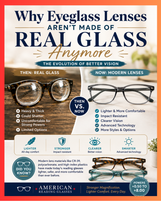
Why Eyeglass Lenses Aren’t Made of Real Glass Anymore
If you’ve ever wondered why modern reading glasses feel so lightweight compared to older glasses, the answer comes down to one major change in the optical industry: most eyeglass lenses are no longer made from real glass.
Today’s reading glasses use advanced lightweight materials designed for comfort, durability, and clearer everyday vision — especially for people who wear stronger reading powers like +4.00 to +8.00.
But why did the eyewear industry move away from traditional glass lenses in the first place?
The Early History of Eyeglasses
The earliest eyeglasses date back to the late 1200s in Italy, where craftsmen hand-ground glass lenses to help scholars and readers magnify text.
For centuries, glass lenses were considered the standard in eyewear because they offered excellent optical clarity and durability.
Traditional glass lenses were commonly used in:
- Reading glasses
- Prescription eyewear
- Magnifying lenses
- Early bifocals
- Industrial safety glasses
By the early 1900s, nearly all eyeglasses were made with mineral glass lenses.
The Problems With Glass Lenses
Although glass lenses provided clear vision, they also came with several disadvantages.
Glass Lenses Were Heavy
Older eyeglasses could feel extremely heavy on the face, especially for people with strong prescriptions or high magnification reading glasses.
Thicker lenses often created the “coke bottle” appearance many people remember from vintage eyewear.
Glass Lenses Could Shatter
One of the biggest concerns with real glass lenses was safety.
Glass lenses could crack or shatter during accidents, falls, sports activities, or workplace injuries. As eyewear became more common for everyday wear, manufacturers began searching for safer alternatives.
Glass Was Less Comfortable for Everyday Wear
As more people began wearing glasses all day for reading, office work, computers, and mobile devices, comfort became increasingly important.
Consumers wanted eyewear that felt lighter, thinner, and easier to wear for long periods of time.
The Plastic Lens Revolution
The biggest change in the optical industry came during the 1940s with the introduction of CR-39 plastic lenses.
CR-39 was originally developed during World War II for military applications before being adapted for eyewear manufacturing.
Compared to traditional glass, CR-39 plastic lenses offered major advantages:
- Much lighter weight
- Better impact resistance
- Improved comfort
- Easier tinting options
- Reduced risk of shattering
Consumers quickly embraced lightweight plastic lenses, and by the 1990s, plastic had become the dominant lens material in the United States.
Why Modern Reading Glasses Use Plastic Lenses
1. Improved Safety
Modern plastic lenses are far more impact resistant than traditional glass lenses.
This makes them safer for:
- Everyday use
- Children’s glasses
- Sports eyewear
- Safety glasses
- High magnification readers
2. Lightweight Comfort
Today’s consumers expect reading glasses to feel comfortable enough for all-day wear.
Modern materials dramatically reduce pressure on the nose and ears compared to older glass lenses.
This becomes especially important for stronger reading powers and larger frame styles.
3. Better Technology
Modern lens materials made it possible to develop advanced optical features such as:
- Blue light filtering
- UV protection
- Anti-reflective coatings
- Photochromic transition lenses
- High-index thin lenses
- Scratch-resistant coatings
These technologies are easier and more cost-effective to manufacture using advanced plastics instead of traditional mineral glass.
4. Fashion and Modern Eyewear Trends
Glasses are no longer viewed only as medical devices — they are also fashion accessories.
Modern consumers want:
- Oversized frames
- Thin lightweight lenses
- Stylish readers
- Comfortable all-day wear
- Stronger magnification options
Plastic lens materials make these modern styles possible.
The Most Common Lens Materials Used Today
CR-39 Plastic
CR-39 remains one of the most commonly used lens materials for reading glasses because it provides excellent optical clarity while remaining lightweight and affordable.
Polycarbonate
Polycarbonate lenses are known for exceptional durability and impact resistance, making them ideal for active lifestyles and safety eyewear.
High-Index Plastic
High-index lenses help reduce thickness and weight for stronger prescriptions and high magnification reading glasses.
Trivex
Trivex is considered a premium lens material because it combines lightweight comfort with excellent optical clarity and durability.
Are Glass Lenses Still Made Today?
Yes — some specialty optical labs still manufacture real glass lenses.
Glass lenses can offer excellent scratch resistance and optical clarity, but most consumers now prefer lightweight modern plastics because they are safer, thinner, and more comfortable for daily wear.
Modern Reading Glasses Are Better Than Ever
Thanks to advances in modern lens technology, today’s reading glasses are lighter, safer, thinner, and more comfortable than older glass designs.
At American Reading Glasses, we specialize in hard-to-find reading powers ranging from +0.50 all the way to +8.00 in lightweight everyday styles designed for comfort and clarity.
Whether you need stronger magnification, lightweight frames, or affordable bulk reading glasses, modern lens materials have made comfortable vision more accessible than ever before.
Helpful Resources:
- Ultimate Reading Glasses Strength Guide
- Shop High Magnification Reading Glasses
- Free Printable Reading Chart
Frequently Asked Questions
Are eyeglass lenses still made from real glass?
Some specialty lenses are still made from glass, but most modern eyeglass lenses are now made from lightweight plastics such as CR-39, polycarbonate, and high-index materials.
Why did eyeglass manufacturers stop using glass lenses?
Glass lenses are heavier and more likely to shatter. Modern plastic lenses are lighter, safer, and more comfortable for everyday wear.
What is the best material for reading glasses?
CR-39 and high-index plastics are commonly considered excellent materials for reading glasses because they provide lightweight comfort and clear optics.
Are plastic lenses as clear as glass lenses?
Modern plastic lens technology has improved dramatically and now provides excellent optical clarity while remaining safer and lighter than traditional glass lenses.